


The difference between renovation and restoration decides what your Salt Lake City home needs, and who should do the work.
Home restoration means returning a property to its original condition. The goal is accuracy, not improvement.
A restorer works to match the original materials, finishes, and construction methods as closely as possible, so the home reads exactly as it did when it was built. That is a real discipline, and it matters for a specific kind of property: a landmark home with intact period craftsmanship, original millwork, and architectural significance is worth restoring on its own terms. In those cases the value lives in the authenticity, and changing it would take something away.
What surprises most people is how rarely it applies: very few homes need it.
Restoration is the right answer when a property has genuine historic value that would be diminished by modernizing it. For the vast majority of homes across the Salt Lake Valley, that is not the situation. What those homes need is renovation.
Home renovation is about improvement. Where restoration protects the past, renovation updates a home to current standards and to the way you actually live in it. That covers what you expect from a home today:
Restoration cannot deliver any of that, because delivering it would break the very thing restoration exists to protect. The two goals pull in opposite directions, and the difference between renovation and restoration is precisely that split in intent.
That is why we name the goal first, before anyone talks about materials or timelines. It saves our clients from paying for the wrong kind of project.
The short version we give clients is this. If the goal is to preserve a home exactly as it was, that is restoration. If the goal is to make the home better for the way you live, that is renovation.
Almost everyone who calls us is describing the second one, even when they use the word restoration.
A useful way to test it is to ask what you would regret losing. Renovation vs restoration is really a question about what a home's value rests on:
Restoration vs renovation is rarely a pure either-or in practice. Most homes sit somewhere in the middle, and the skill is knowing which parts to protect and which to improve. That judgment is the work.
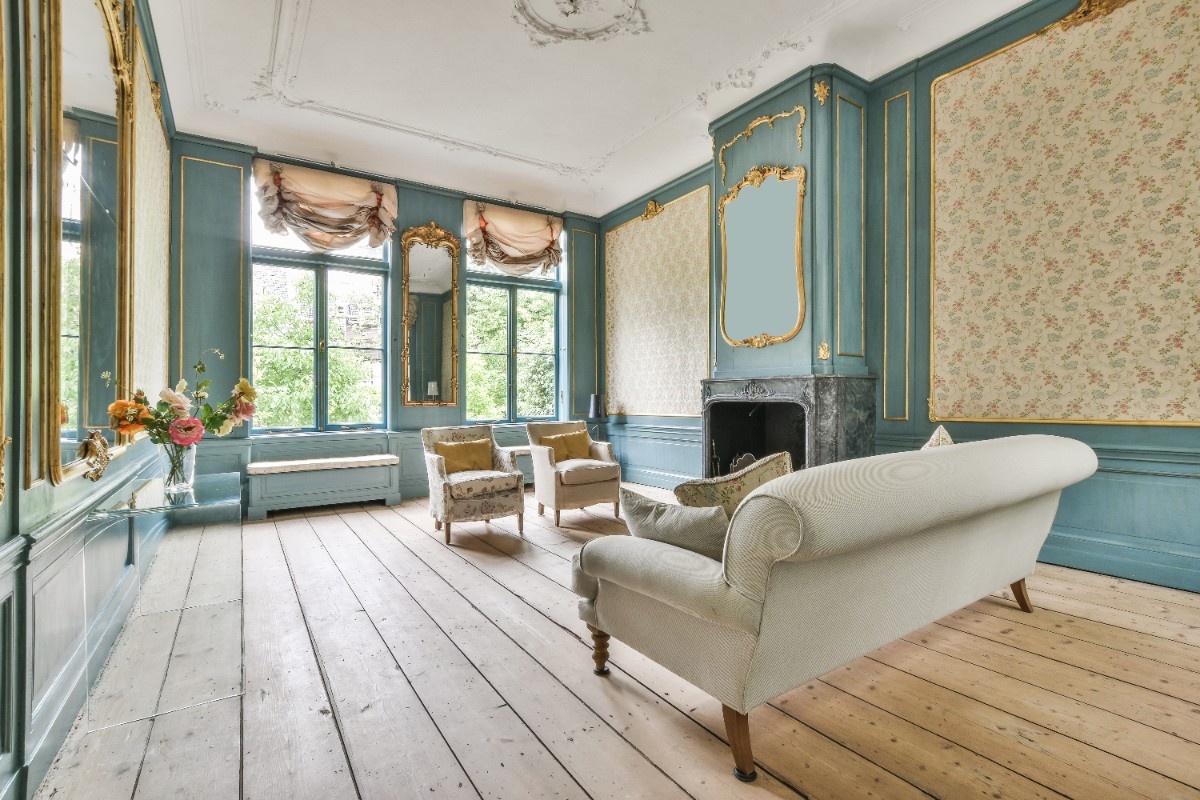
Some homes make the answer obvious. If any of these describe your property, you are looking at renovation, not restoration:
An established Holladay property from the 1970s may be sound structurally, but original wiring, single-pane windows, and forty-year-old mechanicals are not worth preserving. They are worth replacing.
Closed-off kitchens, compartmentalized main floors, and undersized primary suites are products of when the home was built. Renovation opens them up. There is nothing historically precious about a cramped 1980s kitchen.
A newer home in Draper is not a restoration candidate at all. When those finishes date, the work is a straightforward kitchen renovation or bathroom renovation, updating a home that was never meant to be a period piece.
The other direction matters just as much. Some homes have detail that no modern build can reproduce, and stripping it out would be a mistake. The signs:
A landmark Tudor in the Avenues with original leaded glass, hand-plastered walls, and hand-set millwork holds character that is genuinely worth protecting. That is not something you replace. It is something you build around.
When a home's proportions, trim, and materials all belong to one clear era and still read as a whole, preserving that logic is often smarter than fighting it.
Original features that give a property its identity are usually worth keeping, even inside an ambitious project.
The point is not to freeze these homes in place. It is to renovate around what makes them singular, updating the systems and the livability while protecting the character that gives the home its value. Holding that balance is a matter of experience.
Most of our involved projects are exactly this mix: preserve the details that matter, renovate everything else.
The risk in that kind of work is simple. You only discover a problem after the original material is already gone, and by then it is too late to change course. Our process is built to remove that risk. Before any original material is touched, clients see the finished space in full 3D. That is the heart of our design process:
On a project that sits right on the difference between renovation and restoration, that continuity is what keeps the character you are protecting from getting lost between the drawing and the build. Nothing is handed off to a subcontractor who was never part of the conversation about what mattered in the first place.
It is one of the reasons clients trust us with the homes they care most about getting right. You can read more about how we work if that matters to you as much as it does to us.
We will always tell you when a project is not ours to take.
If your home is a designated landmark, or the goal is museum-grade accuracy down to period-correct fasteners and historically exact materials, that is the domain of a dedicated preservation specialist, not a renovation contractor. It is specialized work, and the right expert should do it. A home on the local or national historic register, or one in a protected district, can carry real limits on what may be altered, and those projects deserve a specialist who works within them daily.
For everything else, and that is the overwhelming majority of homes across Salt Lake City, the work is renovation: improving, updating, and elevating a home while respecting whatever character is worth keeping. That covers the full range, from a single whole-home renovation to targeted interior work to exterior work that restores a dated facade to something considered.
Knowing the line between the two, and being honest about which side your project sits on, is the difference between renovation and restoration done right.
This is not a matter of semantics. It decides what you spend, who you hire, and what your home becomes.
Get it wrong and you either strip character out of a home that had some worth keeping, or you pour a restoration budget into a house that just needed a smart, well-run renovation. Get it right and every dollar goes toward the outcome you actually wanted.
For nearly every home in the Salt Lake Valley, the answer is renovation done with judgment: knowing what to protect, what to improve, and how to bring the two together. That is the work we have done across Salt Lake City, Park City, and the surrounding areas for more than fifteen years. If you are weighing what your home needs, Renovation Brothers would be glad to walk it with you and give you a straight answer. Contact us for a consultation and we will tell you honestly which kind of project you are looking at.
No. Restoration returns a home to its original condition and preserves period detail exactly as it was. Renovation improves a home and updates it for how you live today. They pursue opposite goals, which is why the words should not be used interchangeably.
Home restoration is the process of returning a property to its original condition using materials and methods that match how it was first built. The aim is authenticity, not improvement, which makes it the right approach only for homes with genuine historic value worth preserving.
Renovation updates and improves an existing space, while remodeling changes its structure or function, such as removing walls or reconfiguring a floor plan. In practice the two overlap heavily, and most projects involve some of each. Restoration is separate from both, since it aims to preserve rather than change.
Generally yes, because scope drives cost. Remodeling that moves walls, relocates plumbing, or alters structure tends to cost more than a renovation that updates finishes and systems within an existing layout. The only reliable number comes from a detailed estimate on your specific home and goals.
True restoration is often more expensive per square foot than renovation, because sourcing period-accurate materials and specialized craftsmanship is costly and slow. For most homes, a well-planned renovation delivers the result you actually want at a more sensible cost.
Yes, and that is a large part of what we do. The approach is to protect the details worth keeping, original millwork, leaded glass, period proportions, while updating systems, layout, and finishes around them. Seeing the plan in full 3D before any original material is removed is what keeps that character safe.
It depends on whether the home has intact historic detail worth preserving in full. Many older Avenues homes have character worth protecting but still need modern systems and updated livability, which points to a renovation that works around the original features rather than a full restoration.
We handle renovation, including projects that carefully preserve original character. Museum-grade restoration of designated landmarks is a specialized field better suited to a dedicated preservation specialist, and we will tell you plainly if that is what your home truly requires.

Begin your transformation with a free estimate from Renovation Brothers today!
Skilled home remodelers in Utah, creating personalized, high-quality renovations for every home.
Skilled home remodelers in Utah, creating personalized, high-quality renovations for every home.
Ready to start?
Request a quote


